


Please sign in with Google to view the map.
Sign in with GoogleBarcelona Town Hall & Plaça Sant Jaume Guide
Explore Barcelona’s administrative heart at Plaça Sant Jaume, home to the City Hall and Generalitat Palace. Free guided tours of the historic City Hall interior available
Views:
4.1k
About Plaça Sant Jaume
Plaça Sant Jaume — also referred to as Plaza Sant Jaume I or Placa de Sant Jaume — is a prominent civic square in the heart of the Old City of Barcelona. It is widely regarded as the administrative heart of Barcelona and Catalonia. On opposite sides of this historic square stand two of the city’s most important government buildings: the Palace of the Generalitat of Catalonia (Palacio de la Generalidad) and the Barcelona City Hall (Ayuntamiento de Barcelona), both central to Catalan government operations.
In Roman times, the area now known as Plaça Sant Jaume was the Forum of Barcino, the ancient Roman city. This open public space served as a gathering point for civic and political life — a tradition that continues today in this symbolic Barcelona town hall square.
Each March, Plaça Sant Jaume becomes the starting point for the annual Barcelona to Sitges Classic Car Rally, a beloved event that features vintage automobiles parading through the city en route to Sitges. The rally adds a festive and nostalgic touch to the square’s civic calendar, drawing crowds and photographers alike.
About the Palace of the Generalitat of Catalonia
The Palace of the Generalitat of Catalonia is one of the few surviving medieval government buildings in Europe still functioning as a seat of government. Acquired in 1400 by Catalan president Alfons de Tous, it was established as a presidential palace and remains a cornerstone of Catalan government today.
Located in the Jewish Quarter (El Call), the palace is bordered by Carrer de Sant Honorat and Carrer del Bisbe. The latter features the iconic Pont del Bisbe, a gothic bridge that connects the palace to the Casa dels Canonges, which houses the presidential offices.
The palace’s Renaissance façade, facing Plaça Sant Jaume, was designed in 1596 by architect Pere Blai. While the building is not open for regular public access, it occasionally participates in open day events such as the National Day of Catalonia.
Note: The Palace of the Generalitat is not to be confused with the Catalan Parliament Building, which is located in Parc de la Ciutadella.
About Barcelona City Hall
The Barcelona City Hall, also known as the Casa de la Ciutat, is the headquarters of the Ajuntament de Barcelona — the administrative and governing body of the city. It houses the Mayor of Barcelona, the Government Commission, and the Consell Municipal, a 41-member elected body responsible for local governance. This historic town hall is a key government building in Plaça Sant Jaume.
The Saló de Cent, a grand gothic hall within the Barcelona City Hall, is traditionally used for the mayor’s inauguration and other ceremonial events. The Carles Pi i Sunyer Hall hosts the plenary meetings (Ple) of the Consell Municipal. These spaces are central to the city’s civic architecture and political history.
The building itself dates back to the 14th century and was designed by Pere Llobet, a key figure in Barcelona medieval government architecture. Despite its neoclassical façade, the interior preserves its original gothic character. Notable features include the statues of King Jaume I and Joan Fivaller, sculpted by Josep Bover i Mas in 1847, which adorn the vaulted niches of the façade.
Visitors interested in a Barcelona City Hall interior visit can join free guided tours on Sundays or during special events like the city hall open day on the National Day of Catalonia. These tours offer access to the Saló de Cent, Carles Pi i Sunyer Hall, and other historic rooms — a rare opportunity to experience the Casa de la Ciutat from within.
Image Gallery For Barcelona Town Hall & Plaça Sant Jaume
Click on any of the 30 images to open full screen gallery player. Note that viewing images is subject to our Fair Use Policy.
Visiting Plaça Sant Jaume
Plaça Sant Jaume — also known as Plaza Sant Jaume I or Placa de Sant Jaume — is more than just the administrative heart of Barcelona; it’s a vibrant civic space that hosts some of the city’s most iconic public events. Located between two major government buildings — the Barcelona Town Hall and the Palace of the Generalitat — the square is a focal point for Catalan government ceremonies and cultural celebrations.
Throughout the year, Plaça Sant Jaume comes alive with performances by the Castellers de Barcelona, who build human towers during public holidays like La Mercè. The square also serves as the starting point for the annual Barcelona to Sitges Classic Car Rally, held every March — a beloved tradition that draws vintage car enthusiasts from across Catalonia.
Interior Visits to Barcelona City Hall
Barcelona City Hall (Casa de la Ciutat) offers free guided tours every Sunday and on special occasions like the National Day of Catalonia (11th September). These tours provide rare public access to the building’s most emblematic rooms, each steeped in history and civic symbolism.
Visitors enter through the main façade facing Plaça Sant Jaume, a neoclassical structure adorned with statues of King Jaume I and Joan Fivaller sculpted by Josep Bover i Mas in 1847. This entrance sets the tone for the architectural grandeur within.
Inside, the grand staircase welcomes guests with a richly patterned red carpet flanked by polished marble walls and brass railings. At the top stands a classical marble statue in a vaulted niche, symbolizing civic virtue and the solemnity of public service. This staircase leads to the building’s ceremonial halls.
One of the highlights is the Saló de Cent, a Gothic hall named after the 100 counts who governed Catalonia from 1373 to 1714. Its vaulted ceilings and historic furnishings reflect centuries of municipal governance. Nearby, the Carles Pi i Sunyer Hall hosts plenary meetings of the Consell Municipal, where elected councillors debate and shape city policy.
Another standout is the mural room, featuring a vibrant painting of Catalan rural life and tradition. The scene includes a horseman and villagers in traditional attire, framed by marble columns and a coffered wooden ceiling — a celebration of cultural heritage within the seat of civic power.
Whether you're interested in Barcelona town hall Sunday visits, a city hall open day, or simply want to know how to visit Barcelona City Hall, these tours offer a unique opportunity to explore the gothic halls, civic architecture, and government building interiors that define the Ayuntamiento de Barcelona.
Barcelona City Hall Guided Tour Times
- Catalan: 10:30h, 11:30h & 12:30h
- Spanish: 11:00h & 12:00h
- English: 10:00h
The visit is FREE and starts from the entrance in Carrer de la Font de Sant Miquel and are limited to 25 people per timeslot.
Interior Visits to Palau de la Generalitat de Catalunya
Unlike Barcelona City Hall, the Palau de la Generalitat de Catalunya is not regularly open to the public. Access is only granted on select occasions such as the National Day of Catalonia (11th September) and Open House Barcelona, when limited guided tours allow visitors to explore parts of this historic government building.
Entry is typically restricted and must be booked in advance through official channels. These rare opportunities are ideal for those interested in historic government buildings in Barcelona, Catalan political history, and Renaissance architecture.
While less frequent than Barcelona City Hall guided tours, a visit to the Palacio de la Generalidad offers a deeper understanding of Catalonia’s institutional legacy and its role in shaping regional governance. Due to the rarity of public viewings, I have not yet been able to visit the interior myself — a reflection of just how exclusive access to this medieval government building truly is.
Accessibility & What to Bring
Interior visits to Barcelona City Hall involve multiple staircases and historic corridors, with no official information available online regarding reduced mobility access. It may be possible to arrange an accessible visit by phoning in advance: 93 402 73 26. Visitors with mobility concerns are encouraged to confirm arrangements ahead of time.
The surrounding Gothic Quarter and Plaça Sant Jaume feature uneven cobbled streets, so wearing sensible shoes is highly recommended to navigate the area comfortably and safely.
During my visit, I was permitted to enter with a small 10L rucksack, which was considered acceptable. Larger bags may be refused at the entrance, so it’s best to bring only essentials. If you're planning to take photos or notes, a compact camera or phone is ideal — and don’t forget water, especially in warmer months.
For those joining a Barcelona City Hall guided tour, arriving early is advised due to limited capacity and timed entry slots. Tours typically begin at the entrance on Carrer de la Font de Sant Miquel.
Barcelona Town Hall & Plaça Sant Jaume Summary of Prices
Train/Bus Fare
Entry Ticket
Additional Information
Train/Bus Fare
Entry Ticket
Additional Information
Adult
Zone 1 T-casual
FREE
Child
€ 1.25
FREE
Notes
Interior visits Sundays only 10 - 14h
Getting to Plaça Sant Jaume
Address: Plaça de Sant Jaume 1, 08002 Barcelona
The square is located in the heart of the Gothic Quarter, surrounded by narrow alleys and historic buildings. The nearest TMB Metro station is Jaume I on the yellow (L4) line. From the station, walk approximately 300 meters up Carrer de Jaume I to reach Plaça Sant Jaume.
For convenient travel across the city, use a T-Casual ticket or the Hola Barcelona Travel Card, which offers unlimited rides on public transport during your stay.
Map for Barcelona Town Hall & Plaça Sant Jaume
Weather for Barcelona Town Hall & Plaça Sant Jaume
Where to stay near Barcelona Town Hall & Plaça Sant Jaume
Nearby Attractions to Barcelona Town Hall & Plaça Sant Jaume
 METRO
METRO
3.8k views
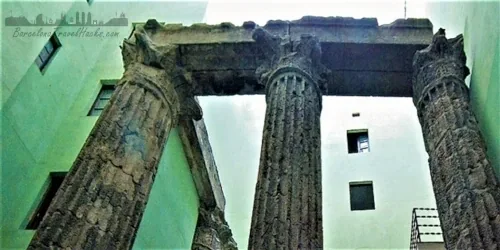
MUHBA Temple of Augustus – Hidden Roman Columns
2000-Year-Old Roman Temple ruins in Barcelona. Hidden Gothic courtyard with towering columns from ancient Barcino. Free to visit and rich in Roman heritage
Read more >
 METRO
METRO
3.7k views
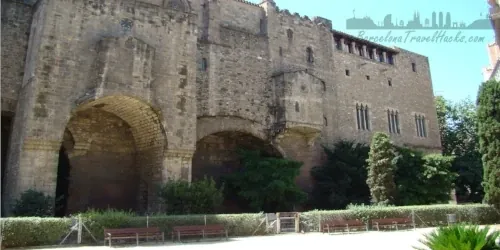
Barcelona Roman Wall | Gothic Quarter Walking Route
Explore Roman wall remains of ancient Barcino in Barcelona’s Gothic Quarter, from Plaça Ramon Berenguer III to the Sea Gate at Plaza dels Traginers
Read more >
 METRO
METRO
3.6k views
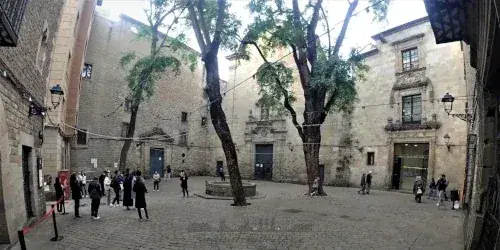
Plaça Sant Felip Neri – Baroque Church, Fountain & Civil War History
Discover Plaça Sant Felip Neri, a hidden Gothic Quarter square with a baroque church scarred by Civil War bombings, a peaceful fountain, and historic guild buildings
Read more >
 METRO
METRO
3.3k views
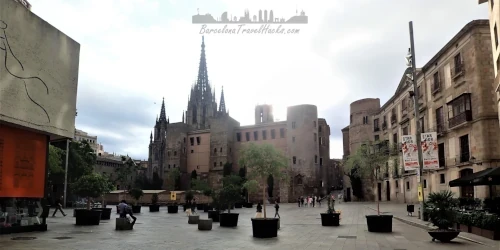
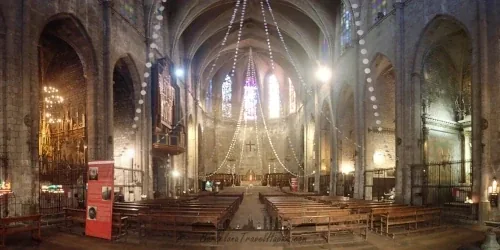
Barcelona Cathedral | Gothic Landmark in the Heart of El Gòtic
Visit Catedral de Barcelona in the Gothic Quarter. Discover cloisters, rooftop views, Santa Eulàlia’s crypt, and centuries of Gothic architecture and history
Read more >
 METRO
METRO
3.1k views
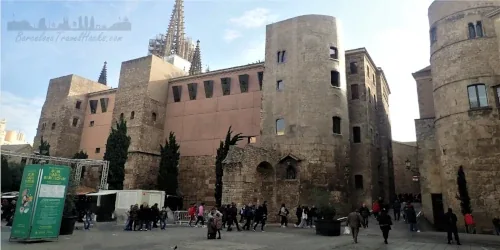
Santa Maria del Pi Basilica | Bell Tower & Museum Visit
Explore Barcelona’s Gothic Basilica de Santa Maria del Pi. Visit the museum, climb the bell tower, and enjoy artisan markets and classical concerts.
Read more >
 METRO
METRO
3.1k views
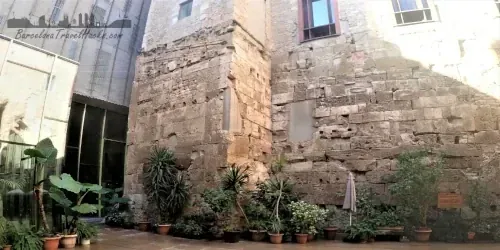
Casa de la Ardiaca – Hidden Gem & Photo Spot in Barcelona
Scenic courtyard, rooftop views & modernist mailbox. A Gothic hidden gem beside the cathedral with archives, Roman walls & wedding-worthy photo spots
Read more >
 METRO
METRO
2.5k views
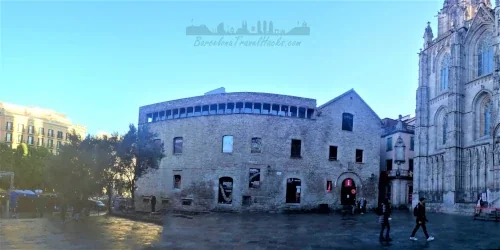
MUHBA Porta de Mar – Roman Sea Gate & Thermal Baths
Explore Roman ruins in Barcelona’s Gothic Quarter. Free museum with 2000-year-old sea gate, thermal bathhouse remains, and trade history from ancient Barcino
Read more >
 METRO
METRO
1.7k views