


Peguera Abandoned Village Hike + Gallina Pelada Summit
13 km circular hike from Peguera to Roca Blanca and Gallina Pelada summits. Includes mining ruins, forest trails, and a visit to Cercs coal museum
Views:
1.4k
About Peguera Roca-Blanca Hiking
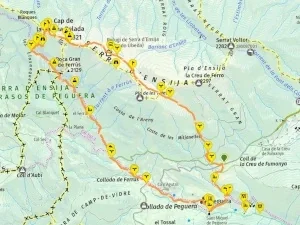
This 13 km circular route begins at the abandoned village of Peguera, located 20 km from Fígols at an altitude of 1,620 metres above sea level. The ruined village clings to the side of a mountain bluff known as Roc de Peguera and was once home to coal mine workers until the final depopulation of the last inhabited house, Cal Penjorell, in 1968.
Peguera once featured a small castle atop Roc de Peguera and the now-ruined Sant Miquel de Fígols chapel. Upon arrival, hikers also encounter the remains of the Can Güell farmhouse. In the early 20th century, the Serra d’Ensija to the north and Rasos de Peguera to the south were among the first places in Catalonia where skiing was practised.
This route passes through the abandoned village before ascending the valley of Roques de Ferrús to reach the summits of Roca Blanca and Cap de la Gallina Pelada, continuing along the Serra d’Ensija ridgeline before descending back to Peguera.
The Peguera valley played a pivotal role in Catalonia’s industrial history. From the late 19th century through the mid‑20th, it was a hub for lignite coal extraction, with a network of mines, funiculars, and railways connecting remote shafts to the town of Cercs and beyond. Entire communities like Sant Corneli were built to house mine workers, complete with schools, bakeries, and churches. However, as demand for lignite declined and extraction costs rose, the mines gradually closed. By the 1970s, the industrial railway had ceased operation, and by the 1980s, most mining activity had ended. Today, the ruins of Peguera and its surrounding infrastructure stand as quiet witnesses to a once‑thriving coal economy that shaped the landscape and livelihoods of Alt Berguedà.
With the passing of time, the landscape around Peguera has shed its industrial character and returned to a more natural state. The only traces of its coal-mining past are the crumbling stone houses and the dark mouths of mine shafts tucked into the hillside. The route itself is a journey through changing terrain: it begins with a forested valley ascent where sunlight glints off the exposed rock faces, then climbs to a rocky ridgeline with sweeping views of the snow-capped Pyrenees in the distance. From there, the trail crosses a high mountain plain — once used for skiing, though snowfall is rare today — before descending through a richly coloured autumn forest, where the ground is thick with leaves and the air carries the scent of pine and earth. It’s a route that blends history, altitude, and seasonal beauty in a way that feels both remote and restorative.
For a full weekend’s experience, I recommend visiting the Museu de les Mines de Cercs. If doing this as an autumn or winter hike, bring a head torch — the descent may take place in fading light.
Coal Mining in the Peguera Valley
The Peguera River valley, stretching from the now-abandoned village down to the town of Cercs, was once a major hub for lignite coal mining. A network of mines operated along the valley, using animal-hauled cable carts and an industrial railway to transport coal to Cercs. Next to the C-16 motorway in Cercs, a Via Verda cycle trail now follows part of the old railway route that once carried lignite to Barcelona via Manresa. This railway ceased operation in 1973 and was never converted for passenger use. Nearby, the abandoned coal-fired power station stands as a relic of the region’s industrial past — it once burned lignite extracted from these mountains.

Title: Antiga central tèrmica de Cercs
Sant Corneli is a small village on the BV-4025 highway, originally built as a housing colony for workers at the Sant Romà mine in the Peguera valley. The colony was self-sufficient, with a bakery, school, dentist, and church — necessary due to the isolation of the mining operations. Today, the Museu de les Mines de Cercs occupies the former colony buildings, offering exhibitions on the mining history, guided tours, and a fascinating section on dinosaur fossils discovered in the lignite seams. A mine train takes visitors 450 metres into the main shaft, where visual displays showcase mining techniques used over the 150-year history of the site.

Title: Museu de les Mines de Cercs
About 1 km south of the abandoned village of Peguera lies the Mina Porvenir o Eureka. Although entry is not permitted, visitors can view the mine entrance and the remains of surface buildings. Between the various mine shafts in the area, a total of 9 km of railway operated from 1910 to 1928, connecting Peguera to Cercs. The mining company Peguera i Fígols (Carbones de Berga SA) eventually installed 11 inclined cable-pulled funiculars to transport coal from the mountains down to the Llobregat River valley. Since 1931, the mines have been owned by the Olano family.

Title: Mina Porvenir o Eureka entrance shaft
Just 700 metres south of Peguera is an abandoned tower that once housed an electricity transformer, with overhead power lines connecting it to the mining infrastructure. It stands today as a silent marker of the valley’s industrial past.

Title: Mina Porvenir o Eureka electricity transformer tower
Image Gallery For Peguera Roca-Blanca Hiking
Click on any of the 40 images to open full screen gallery player. Note that viewing images is subject to our Fair Use Policy.
Visiting Peguera: A Weekend of Hiking and Mining History
This route is ideal for a weekend escape that blends high-altitude hiking with industrial heritage. Begin your Saturday with the full 13 km circular hike from the parking area near Peguera, taking in the abandoned village, panoramic summits, and richly coloured forest descent. After the hike, return to the valley and stay overnight in the Cercs or Berga area. On Sunday, visit the Museu de les Mines de Cercs, located in the former mining colony of Sant Corneli. The museum opens at 10:00 am and offers a 2-hour immersive experience, including a mine train ride 450 metres into the mountain and exhibitions on coal mining and dinosaur fossils discovered in the lignite seams.
An Overview of the Peguera Hiking route
The trail begins along a rural gravel road heading south, passing the ruins of Can Güell farmhouse. At the Font de Cal Coix de Peguera natural spring, you can optionally continue 1 km south to view the entrance of the Mina Porvenir o Eureka, or bear right towards the abandoned village of Peguera.
Upon arriving at Peguera, the first building you’ll see is the ruined Sant Miquel de Fígols chapel. Turn right and head uphill to explore more ruins, including the abandoned Cal Gran farmhouse and several large stone buildings built into the mountainside. After exploring the village, return to the gravel road and continue west.
Follow the GR-107 trail (Camí de les Bones Homes) as it leaves the road and climbs through a forested ravine alongside the Roques de Ferrús. The path ascends to the Collet l'Estret (1976 m) mountain plain, then bears right for a steep climb to the Roca Blanca (2292 m) summit. Continue along the PR-C-79 ridgeline to reach the La Gallina Pelada (2321 m) summit.
The trail then crosses a wide mountain plain, passing the Refugi Serra d'Ensija (2173 m) mountain hut. From here, follow the Serra d'Ensija ridgeline before descending through mixed forest back to Peguera. The descent is especially scenic in autumn, with richly coloured foliage and filtered light through beech and pine trees.
Hiking with a Dog
This route includes mountain plains and forested ascents and descents through oak, beech, and pine woodland. In spring and summer, you may encounter Pine Processionary Caterpillars, which are toxic to dogs. Autumn and winter are safer seasons for hiking with pets. Be cautious at the summit viewpoints — some have sheer drops. Dogs should be kept on a lead in exposed areas.
Museu de les Mines de Cercs Opening Hours
- Tuesday to Friday: 10:00 h to 14:00 h
- Weekend & Bank Holidays: 10:00 h to 15:00 h
- Closed: Mondays (except bank holidays)
- Tuesday to Thursday: 10:00 h to 14:00 h
- Saturday & Sunday: 10:00 h to 18:00 h
- Monday: 10:00 h to 15:00 h
- Tuesday to Saturday: 10:00 h to 14:00 h & 16:00 h to 19:00 h
- Weekend & Bank Holidays: 10:00 h to 15:00 h & 16:00 h to 19:00 h
- Closed: Mondays (except bank holidays)
- Tuesday to Friday: 10:00 h to 14:00 h
- Weekend & Bank Holidays: 10:00 h to 15:00 h
- Closed: Mondays (except bank holidays)
- December 18th to January 7th: Annual holidays
- April 23rd: Sant Jordi’s Day
- May 30th: Corpus Christi (Religious holiday)
- General: €11.00
- Child (5–12 years): €4.00
- Teen (13–18 years): €8.80
- Retired (over 65 years): €8.80
- Groups (min. 30 people): €8.80 per person
- January to July
- Easter
- August
- September to 17th December
- Closed
Tickets are sold exclusively at the museum ticket office. Last entry is two hours before closing to allow time for the full visit.
Museu de les Mines de Cercs Prices
What to take for Peguera Roca-Blanca Hiking
I always pack for wind and rain when doing this hike — the route climbs into the pre-Pyrenees, where weather can shift quickly, especially in autumn and winter.
Bring 2–3 litres of water, as there are no reliable refill points along the trail. Snacks or a packed lunch are also recommended — the full loop can take 5–6 hours depending on pace and conditions.
Although the high plain was once used for skiing, snowfall is rare these days. That said, if the forecast suggests snow or icy conditions, I recommend bringing crampons or microspikes for added grip on the ridge and descent.
Other essentials include a waterproof jacket, layered clothing, gloves, and a headlamp if you're starting late or hiking in winter. Trekking poles are useful for balance on uneven terrain and during the descent.
Peguera Roca-Blanca Hiking Summary of Prices
Train/Bus Fare
Entry Ticket
Additional Information
Train/Bus Fare
Entry Ticket
Additional Information
Adult
€ 25.00
€ 11.00
Child
€ 25.00
€ 8.80
Notes
Ticket is for the Museu de les Mines de Cercs. Montain hike is FREE
Getting to Peguera Roca-Blanca Hiking
Address:Peguera, Fígols, 08698 Bergá
Take the C-16 motorway north towards Berga. About 23 km beyond Berga, exit onto the BV-4025 at Fígols. Follow this scenic mountain road through the village as it climbs steadily into the pre-Pyrenees. After approximately 20 km, you’ll reach a small parking area at Pla de la Creu de Fumanya, the recommended trailhead for this hike.
There are no bars or restaurants near Peguera, so I recommend stopping at the Cercs petrol station on your way up. Here you’ll find a classic roadside Spanish café called Els Portals de Cercs. It’s well known for its rear terrace overlooking the Pantà de la Baells reservoir and its generous counter of homemade sweet and savoury pastries — some of the best you’ll find in this part of Catalonia.
Wikiloc Trail for Peguera Roca-Blanca Hiking
Please sign in with Google to view the Wikiloc Route map.
Sign in with Google