


Please sign in with Google to view the map.
Sign in with GoogleBarcelona Natural Sciences Museum – Museu Blau for Families
Discover Barcelona’s Museu Blau, an interactive natural sciences museum with fossils, evolution exhibits, hands‑on displays and child‑friendly learning in the Forum district
Views:
2.1k
About Barcelona Natural Sciences Museum
Barcelona’s Natural Sciences Museum, Museo de Ciències Naturales de Barcelona, is widely known as the Museu Blau thanks to its striking blue, triangular building designed by Herzog & de Meuron in the Fòrum district. The museum relocated here in 2010 from the historic Three Dragons Castle, reopening to the public in 2011.
Inside this visually iconic “blue slice” building is a modern, interactive natural history museum that takes visitors on a journey from the origins of the universe to the incredible diversity of life on Earth today. Exhibits explore the Big Bang, geological time, evolution, species classification, ecosystems, viruses and bacteria, mineralogy, and much more — all presented in a child‑friendly, hands‑on environment designed to spark curiosity in visitors of all ages.
The museum is divided into immersive zones with multimedia displays, touchscreens, fossils, minerals, preserved animals, and interactive learning stations. Lighting, sound, and design are used to create a visually engaging experience that makes complex scientific concepts easy to understand for children, teens, and adults.
The Natural Sciences Museum of Barcelona operates across two main sites: the Museu Blau in the Fòrum building, and the Jardí Botànic in Montjuïc, which focuses on Mediterranean and global plant biodiversity.
Barcelona Natural Sciences Museum History
- 1878: The naturalist Francesc Martorell i Peña donates his extensive scientific collection to the city of Barcelona. This gift becomes the foundation for the future network of natural science museums.
- 1917: The city assigns the Three Dragons Castle in Parc de la Ciutadella to the Museo Martorell de Arqueología y Ciencias Naturales. A dedicated natural sciences museum opens inside the modernist building.
- 2004: Architects Herzog & de Meuron complete the striking blue triangular building in the Fòrum district, originally constructed for the Universal Forum of Cultures. Its bold geometry and deep‑blue façade later inspire the nickname Museu Blau.
- 2010: After nearly a century in the Three Dragons Castle, the Natural Sciences Museum closes its historic Ciutadella location and prepares to relocate to the new Fòrum building.
- 2011: The Museu Blau officially opens to the public. The new space allows for modern, interactive exhibitions, improved accessibility, and a more immersive visitor experience. The museum becomes the flagship site of the Museu de Ciències Naturals de Barcelona network.
Image Gallery For Barcelona Natural Sciences Museum
Click on any of the 74 images to open full screen gallery player. Note that viewing images is subject to our Fair Use Policy.
Visiting Barcelona Natural Sciences Museum
As you enter the building you walk up stairs with an overhanging whale skeleton. After buying a ticket in reception you pass the lockers area and enter a display about the history of the museum. From here you can also look down onto the whale skeleton.
The actual museum begins when you enter a zone with dim lighting which has a giant multi media display of planet earth. Here you will learn about the big bang and continental shift of the plates that make up the earth's surface. after the globe display the route continues into a blue lit corridor with rocks and fossils that are millions of years old. For each important period of Earth's development, you can use touchscreens to retrieve more interesting information about the different epochs or specific exhibits.
The next section is a large collection of animal and bug fossils as well as a room about Human evolution. The evolution room contains a replica of Lucy, the well-known skeleton of a pre-human Australopithecus afarensis, which was found in 1974 in Ethiopia. You will see a prognathodon stadtmani kass skeleton (jurasic sea creature) hanging from the ceiling. There is a collection of large shells and an explanation of symmetry in nature as well as the identifying characteristics of animal cells.
After this is the collection that came from the original science museum in Three Dragons Castle. it is a zone of large glass displays with stuffed animals, including a lion, gorilla and many birds. When I visited this museum in Three Dragons Castle (pre 2010) this collection was displayed in a wooden panelled room which was a little bit creepy. The new museum in Forum uses lighting to make this section more educational and not at all creepy.
After this the museum leads into a flora and fauna exhibition from the tiny microbe to mushrooms, trees, plants and an explanation of plant cell structure. In this zone you will find an interactive room about bio diversity and a focus on the Catalonia region of Spain. The exhibition also illustrates the responsibility that humans have for the preservation of the environment and nature.
The last theme of the museum is mineralogy, the crystal structures and different types of rocks that can be found on earth.
- The museum is child friendly and next to Barcelona beaches. and the Forum Port and beach.
- The building architecture and interior lighting make the exhibits more engaging for the whole family.
- Gain an understanding of the diversity of life on planet earth.
- It is free entry all day on the first Sunday of the month.
why visit Barcelona Natural Sciences Museum
Barcelona Natural Sciences Museum Opening Hours
- Winter (October to February):
- Tuesday to Friday: 10:00h to 17:00h
- Saturday: 10:00h to 19:00h
- Sunday & public holidays: 10:00h to 20:00h
- Summer (March to September):
- Tuesday to Saturday: 10:00h to 19:00h
- Sunday & public holidays: 10:00h to 20:00h
- Closed: Mondays, 1st January, 1st May, 24th June, 25th December
What to take with you for Barcelona Natural Sciences Museum
Access to the museum is permitted with guide dogs, and tactile paving leads from the entrance to the information point. The building is fully accessible, with lift access to all floors, adapted toilets throughout, and a wheelchair available for visitors who need one.
Lockers are provided near the entrance so you can store bags and jackets during your visit. A 50 cent or 1 euro coin is required to release the key, and your coin is returned when you reopen the locker.
Bicycle anchorage points are located directly in front of the museum on Passeig de Taulat, making it easy to arrive by bike if you are exploring the Forum area or the nearby seafront.
Barcelona Card Tickets
If you are planning to visit multiple museums and attractions during your visit to Barcelona, Consider the Barcelona Card which has 25 museums and attractions included in the bundle, including the Barcelona Natural Sciences Museum.
Adult entry costs 6.00 euros with discounts for seniors, students and children. Tickets can be purchased at the museum Reception.
The Museum offers free Entry the first Sunday of each Month
Powered by
GetYourGuide
Getting to Barcelona Natural Sciences Museum
Address: Plaça Leonardo Da Vinci, Barcelona, 08019
- Metro: El Maresme–Fòrum (L4 – Yellow Line)
- Tram: Fòrum stop on the T4 and T6 lines
For travel on the metro, tram and bus network, use a T‑Casual ticket or a Hola Barcelona travel card, which offers unlimited journeys for 48–120 hours.
Documents for Barcelona Natural Sciences Museum
Map for Barcelona Natural Sciences Museum
Weather for Barcelona
Where to stay near Barcelona Natural Sciences Museum
Nearby Attractions to Barcelona Natural Sciences Museum
 METRO
METRO
3.8k views
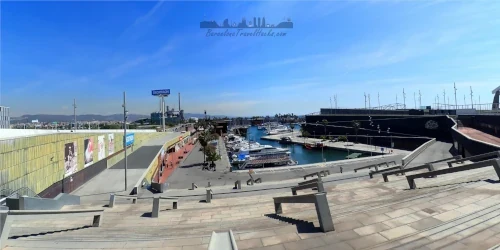
Port Fòrum & Parc Litoral: Coastal Walk, Secret Beach & Jet‑Skiing
Discover Port Fòrum’s Olympic marina, Sant Adrià’s quiet local beach, and the iconic Three Chimneys. Walk, relax, or rent a jet‑ski along Barcelona’s modern coastline
Read more >
 METRO
METRO
2.5k views
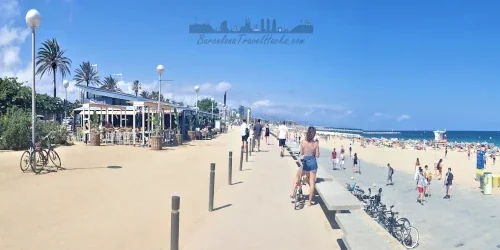
Barcelona Beaches: Poblenou Coast from Port Olímpic to Fòrum
Explore Barcelona’s Poblenou beaches from Port Olímpic to Fòrum — quieter local beaches, a nudist zone, dog‑friendly areas, and reduced‑mobility sea access
Read more >
 METRO
METRO
2.5k views