


Please sign in with Google to view the map.
Sign in with GoogleTàrraco Early Christian Necropolis – Roman & Paleochristian Cemetery
Explore the Tàrraco Early Christian Necropolis, a major Roman and Late Antique cemetery with over 2,000 burials, martyrs’ tombs and an MNAT interpretation centre
Views:
1.7k
About Early Christian cemetery of Tarraco (MNAT)
The Tàrraco Early Christian Necropolis is one of the most important Roman and Late Antique burial grounds in the western Mediterranean. Excavations carried out between 1923 and 1933 uncovered more than two thousand tombs, revealing a vast cemetery used from the 2nd–7th centuries AD. The site preserves both Roman pagan and early Christian burials, including sarcophagi, amphora burials, tile graves, mausoleums and funerary monuments. Many of the most significant finds are displayed in the Museu Nacional Arqueològic de Tarragona (MNAT).
In the early 3rd century AD, the area south of the walled city—between the Via Augusta, the port and the River Francolí—formed a densely populated suburb of warehouses, workshops and modest houses. Roman law required burials to be located outside the city walls, so the roads leading out of Tàrraco became lined with tombs ranging from simple earth graves to elaborate family mausoleums. This district developed into the main Roman cemetery of the colony.
The necropolis reflects the evolution of funerary customs during the transition from pagan Rome to Christian Late Antiquity. Early burials follow traditional Roman rites, while later graves display Christian symbols such as the fish, dove, palm, cross and chrismon. The cemetery gained special importance after the martyrdom of Fructuosus, Augurius and Eulogius in AD 259, whose remains were interred here. Their presence made the site a desirable place for Christians to be buried ad sanctos—close to the tombs of the saints.
By the early 5th century, with Christianity established as the official religion of the Roman Empire, two basilicas and an extensive ecclesiastical complex were built around the martyrs’ tombs. This sacred precinct remained in use until the 7th century, marking the necropolis as a key centre of early Christian worship in Hispania.
Today, visitors can explore part of the cemetery, including a suburban domus, industrial structures, funerary monuments and several notable tombs such as the Sarcophagus of the Lions and the Tombstone of Optimus. The on‑site interpretation centre explains Roman and early Christian beliefs about death, burial and the afterlife.
Roman Burial Traditions
In Roman religion, the Manes were chthonic deities associated with the souls of the dead. They formed part of the wider group of di inferi—the divine beings who dwelled beneath the earth—and were linked to household spirits such as the Lares, Lemures, Genii and Di Penates. The Manes were honoured during the Parentalia, a nine‑day festival dedicated to deceased ancestors, and the Feralia, a public rite marking the final day of remembrance.
Romans believed that the dead had to receive proper funerary rites so that the Manes would welcome the soul into the community of the blessed. Without these rites, the spirit risked becoming a restless, malevolent presence condemned to wander eternally. After the preparatory ceremonies, the body was carried in procession to the burial place, always located outside the city walls and typically along major roads such as the Via Augusta.
Once the burial was completed, families held a funerary banquet beside the tomb. Many tombs in the Tàrraco Early Christian Necropolis include a stone table or mensa, which was used for these ritual meals. These gatherings reinforced family bonds and ensured that the deceased continued to receive offerings and remembrance.
The poetic phrase “May the earth rest lightly on you” appears on numerous Roman epitaphs. It expresses the hope that the weight of the soil would not hinder the soul’s journey to the afterlife—a tender wish for peace and safe passage among the Manes.
Early Christian Burial Traditions
Early Christians in Tàrraco initially followed many of the same funerary customs as their Roman neighbours, but over time these practices took on new meanings shaped by emerging Christian beliefs about salvation and eternal life. By the late 2nd and early 3rd centuries AD, burial had become the dominant practice among Christians, replacing cremation. The type of tomb—ranging from a simple earth grave to an elaborate mausoleum—depended largely on the social and economic status of the deceased.
A defining moment in the history of the necropolis occurred on 21 January 259, when the Christian bishop Fructuosus and his deacons Augurius and Eulogius were executed in the amphitheatre on the orders of the provincial governor. Their remains were taken to the cemetery on the banks of the River Francolí, transforming the area into a sacred place of memory. Christians sought burial ad sanctos—close to the tombs of the martyrs—believing that proximity to holy individuals would aid their own journey to salvation.
By the early 5th century, with Christianity established as the official religion of the Roman Empire, the necropolis evolved into a major ecclesiastical complex. A basilica was built over the martyrs’ tombs, and another basilica rose to the north, forming a religious centre that remained active until the 7th century. These structures reflect the growing importance of the site as both a burial ground and a place of worship.
Christian tombs in the necropolis often feature symbolic imagery expressing hope in resurrection and eternal life. Common motifs include the fish (ichthys), dove, palm branch, cross, chrismon (XP monogram) and ring. These symbols appear on sarcophagi, tombstones and mosaic decorations, marking the transition from Roman funerary iconography to distinctly Christian visual language.
Notable Tombs Discovered at the Tàrraco Necropolis
The excavations revealed an extraordinary variety of burials that illustrate the social diversity of Roman and Late Antique Tàrraco. Two of the most important structures are the Crypt of the Arches and the Crypt of the Engineers, both of which preserve multiple layers of tombs and architectural modifications carried out over several centuries.
Simple graves often contained coffins made from wood, stone, lead, reused tiles or even cut‑down amphorae. These were marked above ground by a modest tumulus or small monument, sometimes grouped by family. More affluent families commissioned marble sarcophagi, mosaic‑decorated tombstones or mausoleums built directly over the burial chamber. Sculptural fragments found across the site indicate that many funerary monuments were once richly adorned.
Most individuals were buried only with the cloth of their shroud, but exceptional cases provide rare insights into personal lives. One of the most moving discoveries is the burial of a young girl, around five years old, interred with an ivory doll—a treasured toy intended to accompany her into eternity. Her epitaph reads: “The innocent Marturia lived for four years. She left in the year of the first consulate of Eugenius Augustus. Marturia, may you live among the blessed.” Dating from AD 393, it is one of the most evocative Christian burials in the necropolis.
Funerary inscriptions reveal much about the people of Tàrraco. Names such as Lucius, Marturia, Optimus, Ampelius and Fabian appear on tombstones, identifying soldiers, jewellers, politicians, architects and ordinary citizens. Some lived only a few years, while others reached advanced ages of nearly ninety. The inscriptions also show that Tàrraco was a cosmopolitan city, home to people born locally as well as migrants from inland Hispania, Greece, Egypt and other parts of the Roman world.
Anthropological studies of the skeletal remains indicate that the average height of the population was approximately 1.65 m for men and 1.54 m for women, offering a rare glimpse into the physical characteristics of the ancient inhabitants of Tàrraco.
Tàrraco Early Christian Cemetery – Necropolis History
- 1923: Construction work to expand the nearby tobacco factory uncovered a large concentration of archaeological remains. Excavations soon revealed an extensive Late Roman and Early Christian cemetery with more than 2,000 documented burials dating from the 3rd to 5th centuries AD along the banks of the River Francolí.
- 1924: Systematic excavations began under the direction of Joan Serra i Vilaró, a priest‑archaeologist whose meticulous documentation preserved the scientific value of the site. His work established the necropolis as one of the most important Early Christian burial grounds in the western Mediterranean.
- 1930: At Serra i Vilaró’s request, a central building was constructed on the site to protect key tombs and provide space for conservation, study and storage. This structure later became the first on‑site museum, known as the museo monográfico.
- 1992: The central museum building closed to the public due to structural deterioration, although archaeological research and conservation work continued under the Museu Nacional Arqueològic de Tarragona (MNAT).
Image Gallery For Early Christian cemetery of Tarraco (MNAT)
Click on any of the 47 images to open full screen gallery player. Note that viewing images is subject to our Fair Use Policy.
Visiting Early Christian cemetery of Tarraco (MNAT)
The visit includes access to a preserved residential sector—a suburban domus with adjoining workshop areas—and part of the extensive Late Roman and Early Christian cemetery. An on‑site interpretation centre explains Roman and Christian beliefs about death, burial rituals and the evolution of funerary customs in Tàrraco.
A century after the first excavations, visitors can still see some of the necropolis’s most significant discoveries, including the Tombstone of Optimus and the Sarcophagus of the Lions. Display panels and models help contextualise the cemetery’s development from a Roman roadside burial ground to a major Christian sacred precinct.
Important: The entrance is not via the elevated walkway connected to the central building. Continue 150 metres further along Avinguda de Ramon y Cajal to reach the official entrance, which is accessed via a ramp.
Allow 30 to 60 minutes to explore the necropolis and interpretation centre.
The site is managed by the Museu Nacional Arqueològic de Tarragona (MNAT), and entry includes access to the MNAT museum at Tarragona Port.
Tàrraco Early Christian cemetery Necròpolis opening hours
- January, February, November & December:
- Tuesday to Saturday: 9:30am to 1:30pm & 3:00am to 5:30pm
- Sunday and Holiday's: 10:00am to 2:00pm
- March, April, May & October:
- Tuesday to Saturday: 9:30am to 1:30pm & 3:00pm to 6:00pm
- Sunday and Holiday's: 10:00am to 2:00pm
- June, July, August & September:
- Tuesday to Saturday: 10:00am to 1:30pm & 4:00pm to 8:00pm
- Sunday and Holiday's: 10:00am to 2:00pm
- Closed: Monday's, 25th & 26th December, 1st January, 1st May.
- Free Entry:19th August (Sant Magí), 23rd September (Santa Tecla) 10:00h to 14:00h
Accessibility to Early Christian cemetery of Tarraco (MNAT)
For the Tarragona day trip I pack a small 10L rucksack with a fleece jersey and if the weather forecast says rain, a waterproof poncho. Wear comfortable shoes so that your ankles are not destoyed on the cobble streets.
NOTE: The information plaques are in Spanish so take headphones and download the museum audioguide app.
The Tàrraco Early Christian Necropolis is not adapted for reduced‑mobility access. Although the entrance is located on Avinguda de Ramon y Cajal, access to the site is reached exclusively via a flight of steps. There is no alternative ramped route and no operational lift providing step‑free entry.
Inside the archaeological area, the terrain consists of uneven ground, compacted earth, exposed stonework and multiple changes in level. These conditions make the site difficult to navigate for visitors using wheelchairs, mobility aids or with limited stability.
The interpretation centre is connected to the site by stairs and does not offer a step‑free approach. As a result, visitors with reduced mobility may find that neither the outdoor excavations nor the indoor displays are accessible.
Early Christian cemetery of Tarraco (MNAT) Summary of Prices
Train/Bus Fare
Entry Ticket
Additional Information
Train/Bus Fare
Entry Ticket
Additional Information
Adult
€ 16.10
€ 4.00
Seniors and students 2 euros discount
Child
€ 16.10
FREE
for Under 16 years.
Getting to Early Christian cemetery of Tarraco (MNAT)
Address: Avenida de Ramón y Cajal 84, Tarragona, 43005
For detailed directions, see the #getting to section of the Tarragona overview page, which explains how to reach Tarragona by train, car or bus.
Map forEarly Christian cemetery of Tarraco (MNAT)
Weather for Tarragona
Where to stay near Early Christian cemetery of Tarraco (MNAT)
Nearby Attractions to Early Christian cemetery of Tarraco (MNAT)
 TRAIN
TRAIN
1.6k views
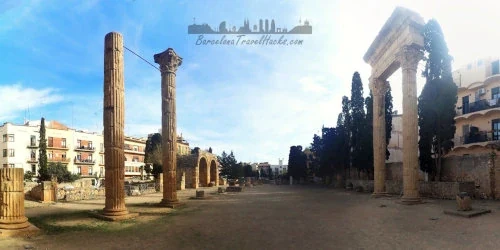
Tarragona Roman Colonial Forum – Fòrum Colonial de Tarraco
Explore the Roman Colonial Forum of Tarraco, the 30 BC administrative and religious centre with porticoes, a Capitoline Triad temple and remains of the forum adiectum
Read more >
 TRAIN
TRAIN
1.5k views
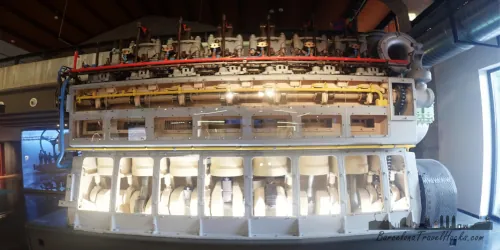
Tarragona Port Museum – Maritime & Industrial Heritage Guide
Discover Tarragona’s free Port Museum, a maritime‑heritage space with exhibits on shipbuilding, navigation, dock workers and the port’s evolution from Roman Tarraco to the modern industrial era
Read more >
 TRAIN
TRAIN
1.5k views